

The Math of Mercy

Updated: Sep 11
Rev. Bobby Musengwa
Transitional General Presbyter
You are delusional.
Sounds like Jesus’ response to Peter’s question about forgiveness.
Perhaps it applies to us as well.
On Sunday we pray, “Forgive us our debts, as we forgive our debtors.”
And then on Monday, Tuesday, Wednesday, Thursday and all days of the week, we walk around refusing to forgive our debtors. That’s delusional.
Truth be told, it’s hard not to be delusional. Peter thought he was being generous, self righteous, morally superior. We are like Peter.
Peter’s Generous Offer Wasn’t Generous Enough
Peter asks Jesus how many times he has to forgive someone who wrongs him. He offers seven times, thinking he’s being extra generous.
In his world, three times was the going rate among the rabbis. Seven sounded like a lot.
Jesus does not raise the number. He throws out the whole scoreboard.
Seventy-seven times, he says. The math was never the point. Jesus is telling Peter, and telling us, to stop counting altogether.
New Testament scholar Tom Wright describes the kind of kingdom Jesus is building:
“The kingdom that Jesus preached and lived was all about a glorious, uproarious, absurd generosity.”
ABSURD is the right word. Grace that makes logical sense is not grace. It is a business deal. And we are not delusional about business deals.
We are delusional about grace, because we keep trying to earn it and keep trying to make everyone else earn it too.
The Debt We Forgot We Owed
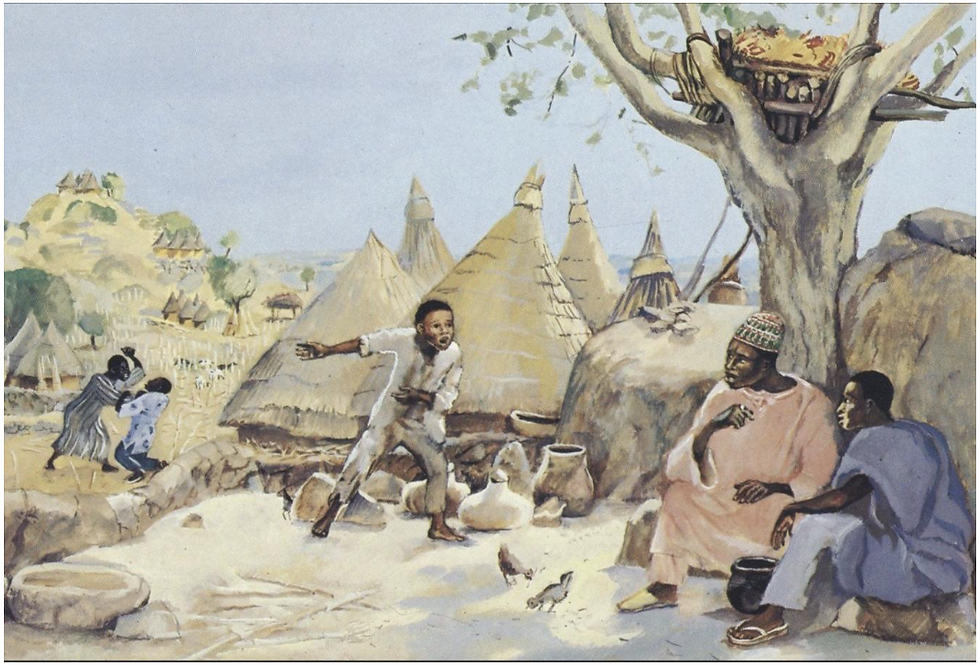
Jesus tells a story to make his point. A servant owes his king ten thousand talents. Somewhere around a billion dollars in today’s money.
It was a number so big it was basically a joke to the people listening. Nobody pays that back. Not in one lifetime. Not in ten.
The king cancels it anyway. All of it. Gone.
That servant should have walked out of that room changed forever.
Instead, he finds a coworker who owes him about twenty bucks and grabs him by the throat.
That is the delusion in full color. He forgot the size of what he’d been forgiven, and the second he forgot it, he started acting like the world owed HIM.
We do the exact same thing.
We forget how much grace it took to get us through this week, this year, this life, and then we get furious over twenty dollars’ worth of somebody else’s mess.
What Would It Cost You to See Clearly
Ask your friends or family this question and watch what happens:
What have I already been forgiven that I have somehow managed to forget?
For me, that question breaks the delusion. It is the only thing that does. It broke my delusion of self sufficiency, having forgotten the forgiveness I’d received.
We have all received unmerited forgiveness at some point in our lives. Yet, most of us forget and live with an unforgiving spirit.
Forgiveness Is Not the Same as Forgetting
You may remember that on June 17, 2015, a gunman murdered nine Black parishioners during Bible study at Mother Emanuel AME Church in Charleston, South Carolina.
Two days later, at his bond hearing, family members stood up and spoke directly to him.
Nadine Collier, whose mother Ethel Lance was killed, told him she forgave him and asked God to have mercy on his soul.
Anthony Thompson, who lost his wife Myra that night, told him the same thing, and pleaded with him to repent.
Think about that. Not years later. Two days.
That is not a nice churchy gesture. That is the ten thousand talents made visible. Those families were not pretending the murders did not happen.
They were not saying it was okay. They were choosing, in the rawest possible grief, to put down a weight the gunman had no right to hand them in the first place.
Community leaders in Charleston later said that response helped hold the city together. It calmed a fury that could have exploded into more violence.
Chris Singleton, who lost his mother that night, has said choosing forgiveness was how he took control of his own life back, instead of letting hatred run it for him.
But Watch What We Do With Their Forgiveness
Here is where we have to slow down and be honest. I write this portion with trepidation, since I had attempted to write a doctoral dissertation on forgiveness and failed. It was based on the Truth and Reconciliation model of South Africa. I just could not handle it.
Some of those same family members in South Carolina have said in later years that all the attention on their forgiveness started to feel like a trap.
The country held them up as heroes. Noble. Inspiring. Papers ran headline after headline about “the city that forgiveness saved.”
But here is the hard question. Saved from what? For whom?
Because while everyone was praising those families for forgiving so fast, something else got quietly pushed aside.
The conversation about WHY a young man walked into a Bible study with a gun and a head full of hate.
Think of it like this. Imagine a member of your congregation gets hurt badly by someone else in the church. Everyone praises them for forgiving quickly.
Everyone claps. Everyone moves on. But nobody ever asks the person who caused the harm to actually change anything.
Nobody looks at whether the church itself has a pattern that lets this violence keep happening. The forgiveness becomes the whole story, and the actual repair never comes.
That is what some scholars and civil rights leaders call the weaponizing of forgiveness.
It happens when a hurting community is expected to do all the hard emotional work of letting go, while the people or systems who caused the harm never have to do the hard work of change.
Here is the pattern, plain and simple:
The victims carry the labor of forgiving. The wrongdoers skip the labor of real self-examination.
Victims who forgive fast get called noble.
Victims who demand justice or stay angry get called bitter or divisive.
That is not fair, and it is not the gospel either.
A quick public forgiveness can create a false peace. Everybody feels better. But the actual conditions that caused the harm never get fixed.
Real repair asks for more than an apology. It asks the wrongdoer to name exactly what they did, without excuses.
It asks for actual restitution, whatever that means in the situation, whether it is a policy change, a financial repair, or a changed structure.
And it asks for the truth to be told and remembered, not smoothed over so everyone can feel comfortable again.
Now you know why I could not complete my doctorate on this topic. Forgiveness is hard. Sometimes we talk about it confidently, superficially, glibly, etc.
Why This Matters for the Parable
Going back to the parable for a second. The king does not just say nice words to the servant.
He CANCELS the debt. Actually, financially, completely. That is not a feeling. That is an action with real weight behind it.
Our forgiveness of each other should work the same way. Forgiveness is real. It is personal. It is between you and God and the person who hurt you.
But forgiveness is not a substitute for the hard conversations a family, a church, or a country still needs to have.
A pastor can forgive a member who wronged them and still call for real change in how the church handles conflict.
A community can honor the mercy of families like the ones from Mother Emanuel and still demand that the country do the work those families should never have had to carry alone.
Unforgiveness Is Its Own Prison
The parable does not end gently. The unforgiving servant is handed over to be tortured until he pays a debt he can never pay.
That is not just a warning about the next life. That is a description of right now, this week, in our homes, our churches, our country, our world.
Holding a grudge does not punish the person who hurt you. It punishes you.
Ask anyone who has carried one for ten years how much peace it bought them. The answer is none.
What to Do With This on Sunday
You already prayed the words this week. “Forgive us our debts, as we forgive our debtors.”
That is not a soft phrase. That is a request to be treated by God the exact same way we treat everyone else.
Most of us would not survive that deal if we stopped and thought about it.
Your action step this week:
Name one debt you are still holding against someone, specifically, not in general terms. Then ask yourself honestly what it is costing you to keep carrying it, and what it might cost you to finally put it down.
And ask a second question too. Is there a system, a habit, or a pattern in your own home, church or community that needs real repair, not just a forgiving smile papered over the top of it?
Let us help one another see the moment we walked out of God’s mercy and straight into someone else’s throat.
May God help us see the difference between a soft peace and a real one.
A Prayer
Lord, you have already forgiven us more than we can count.
We say the words every week. Forgive us our debts, as we forgive our debtors. Help us mean them.
Show us the grudge we are still carrying. Name it for us if we won’t name it ourselves.
Give us the courage of the families in Charleston, who chose mercy in their darkest hour, without pretending the wrong did not happen.
And Lord, keep us honest. Do not let us hide behind someone else’s forgiveness to avoid the hard work you are calling us to do.
Do not let us praise a victim’s mercy and then walk away from the repair still left undone.
Break our delusion. Help us see how much we have been forgiven, so we can finally let go of how little others owe us, and take up the harder work of making things right.
In Christ’s name, who forgave us first, and calls us to more than words.
Amen.


Comments