

It Was Never About the Soil

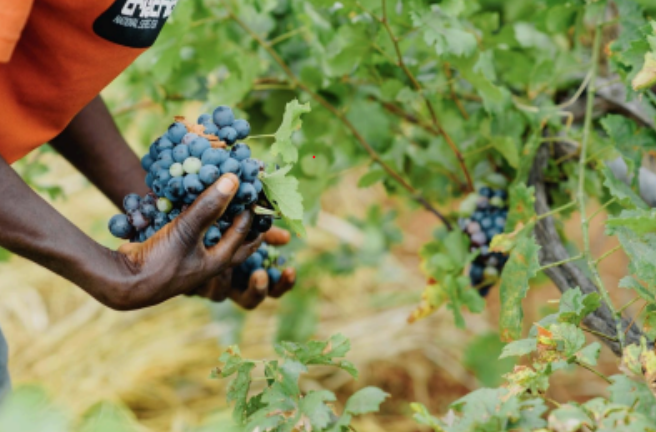
Rev. Bobby Musengwa
Transitional General Presbyter
Growing up, preachers would ask: what kind of soil are you?
Turns out, that might be the wrong question.
According to The New Interpreter’s Bible commentary on Matthew, scholars agree that "what kind of soil am I" was never Jesus' question. They posit that this question came later. It is the church's interpretation, added on top of the story, not the story itself.
So what was Jesus actually saying?
The Real Story Jesus Told
Strip away the allegory and look at the bare parable. A sower throws seed. Some fails. Then, against all odds, the harvest comes in bigger than anyone in that field could have imagined.
Historians say in first-century Palestine, a harvest of four to ten times what you planted was normal. Fifteen times was considered exceptional, the kind of year people talked about for a generation. A hundredfold harvest was not just good. It was almost unheard of, the kind of yield you only read about in scripture, back in Genesis, when Isaac planted in the middle of a famine and reaped a hundredfold because God blessed him.
That is likely what Jesus is doing here. He is not describing an ordinary Galilean harvest. He is reaching back to Isaac's story and saying: this is what it looks like when God is the one bringing in the crop. The story starts in the ordinary, dusty, disappointing world of failed seed. It ends inside the biblical world of promise.
The point was never the failure rate. The point was that God's harvest comes in anyway, and it comes in impossibly large.
That is what my grandma in my Venda village never got to see in her own fields, season after careful season. Poor farmers do not get miracle harvests. They get four to tenfold if they are lucky, and they plant accordingly, seed by precious seed. Which is exactly why this story would have stunned people like her. A harvest like this is not something you earn through careful farming. It is something God does.
So Where Did "What Kind of Soil" Come From?
It came from Matthew.
By the time Matthew wrote his gospel, the church had lived through hard years. The Messiah had come, and most of Jesus' own people had not believed it. Matthew needed to help his church make sense of that. So when he tells the parable's interpretation in verses 18 through 23, he shifts the focus. He turns Jesus' single "seed" into "seeds," plural, because now he is thinking about individuals and how each one responds.
That is where the soil question comes from. It is a real and important question. It is just not Jesus' original one.
And even here, Matthew will not let us turn it into a self-improvement project. Two verses earlier, in 13:11, Matthew makes something clear: understanding itself is a gift of God. We do not muscle our way into good soil through willpower. Grace comes first, always.
But that gift does not erase our responsibility either. One commentary on this passage put it plainly: believers may not blithely assume they are the good soil. The choices we make with what God has given us are not decorative. They are the whole ballgame. That is the tension Presbyterians have always tried to hold. Grace first. Response still matters. Both true at once.
We Just Watched This Play Out
Mission Presbytery's commissioners just returned home from the 227th General Assembly. So did commissioners from every presbytery in our denomination.
They sat in a big room with a docket full of tough conversations, the kind that could scorch anyone with no roots, the kind that grows thorns fast if fear or pride take over instead of prayer.
They did not skip those conversations. They stayed. They listened. They prayed. They spoke. They discerned. They voted. They led with courage instead of certainty.
That is what it looks like when understanding, God's gift, meets a choice, our response. Nobody earned their way into that room by being especially good soil. But once they were there, what they did with it mattered enormously.
We are proud of every one of our Mission Presbytery commissioners for that work. And we are grateful to God for commissioners across the whole denomination who carried GA227 with that same prayerful, courageous spirit.
Your Move This Week
Do not ask "am I good soil." That question puts the whole weight on you, and it was never yours to carry alone.
Ask this instead: what has God already given me, and what am I doing with it? Better still, this question can also be applied to your congregation as well: what has God already given our congregation, and what are we doing with it?
Name one thing this week. A gift, an opportunity, a hard conversation you have been avoiding. Write it down.
Then bring it to your friends at church, your Bible study, your prayer partner. Not to fix it by Sunday. Just to stop pretending it is not there.
Mission Presbytery, this is our Matthew 25 work too. Christ meets us in the hungry, the stranger, the imprisoned, the places the world calls unpromising ground. God does not sort people before loving them. Neither should we.
The seed has already been sown. The harvest is not in question. What you do with what has been planted in you, that is the only part left to write.
Grace and peace,
Rev. Bobby Musengwa
Transitional General Presbyter
Mission Presbytery


AE888YK.COM dạo này thấy bạn bè nhắc nên mình cũng ghé thử cho biết, chủ yếu xem trang chủ họ làm ra sao thôi. Vừa vào là thấy bố cục khá sáng sủa, kéo xuống không bị rối vì các khối nội dung tách rõ. Mình lướt qua phần giới thiệu tổng quan với đoạn nói về mấy “thế mạnh” của nền tảng, đọc nhanh vẫn hiểu họ đang muốn nhấn vào trải nghiệm và độ ổn định. Chuyển qua lại giữa các mục cũng mượt, không kiểu bấm rồi chờ loading lâu. Nói chung cảm giác họ chăm chút phần trình bày hơn mình nghĩ, nhìn thân thiện trên màn hình điện thoại. Mấy tiêu đề và box thông…
Hi88.com hôm trước mình cũng tò mò vào thử xem giao diện ra sao thôi, kiểu lướt nhanh chứ không ngồi đọc kỹ hay làm gì. Cảm giác đầu tiên là trang nhìn khá “sạch”, khoảng trắng vừa đủ nên không bị rối mắt. Mấy phần nội dung được chia theo khối rõ ràng, kéo xuống thấy từng đoạn tách bạch nên dễ định hướng mình đang ở đâu. Mình để ý cái menu đặt khá dễ thấy, bấm qua lại vài mục là quen luôn, không phải mò nhiều. Nói chung kiểu sắp xếp này hợp với người chỉ muốn xem nhanh cho biết, không cần suy nghĩ nhiều. Nhìn tổng thể thì các khối thông tin và bố…